Introduction to Very Large Scale Integrated Circuit Design and Systems
I. Introduction to VLSI Design
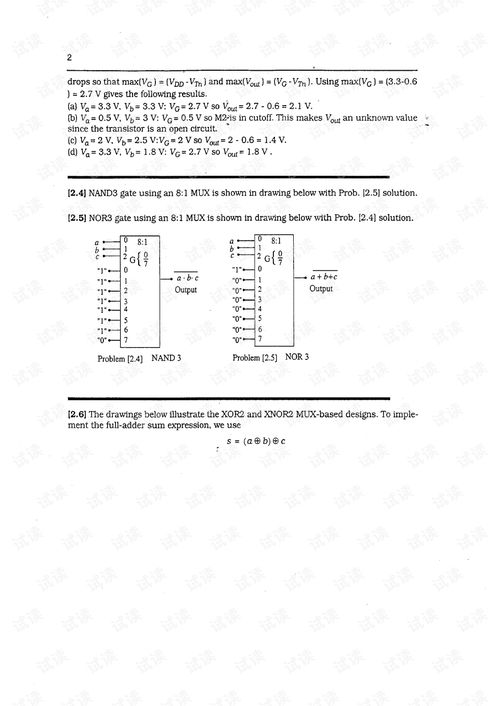
Very Large Scale Integration (VLSI) refers to the process of creating integrated circuits (ICs) by combining thousands, millions, or even billions of transistors onto a single semiconductor chip. The field of VLSI design is the cornerstone of modern electronics, enabling the powerful and compact devices that define our technological era, from smartphones and computers to medical equipment and automotive systems.
II. Core Concepts in VLSI Design
- Design Abstraction Levels: VLSI design is managed through a hierarchy of abstraction levels to handle complexity.
- System Level: Specifying the overall functionality and architecture.
- Behavioral/Algorithmic Level: Describing the system's operation using high-level languages (e.g., C, SystemC).
- Register-Transfer Level (RTL): Defining the flow of digital signals between hardware registers and the logical operations performed. This is typically described using Hardware Description Languages (HDLs) like Verilog and VHDL.
- Gate Level: Representing the circuit as a netlist of logic gates (AND, OR, NOT, etc.) and flip-flops.
- Transistor Level: The detailed schematic of transistors and interconnects.
- Physical/Layout Level: The geometric representation (masks) used for chip fabrication.
- Design Flow: The structured sequence of steps from concept to silicon.
- Specification: Defining what the chip must do.
- Architectural Design: High-level block diagram and performance planning.
- RTL Design & Simulation: Coding the design in HDL and verifying functionality.
- Logic Synthesis: Automatically converting the RTL code into a gate-level netlist using a standard cell library.
- Physical Design (Placement & Routing): Placing the gates on the chip die and routing the wires (interconnects) between them.
- Verification & Sign-off: Extensive checking for timing, power, and manufacturability (Design Rule Checking - DRC, Layout vs. Schematic - LVS).
- Fabrication & Testing: Manufacturing the chip in a foundry and post-production testing.
- Key Metrics:
- Performance: Speed (clock frequency, delay).
- Power Consumption: Dynamic power (switching activity) and static/leakage power.
- Area/Cost: The physical size of the chip, directly affecting yield and cost.
- Reliability: Robustness against noise, process variations, and aging effects.
III. Introduction to Integrated Circuit (IC) Design
Integrated Circuit Design is the broader discipline encompassing the creation of all ICs, with VLSI representing its most complex scale.
- Types of ICs:
- Digital ICs: Process discrete binary signals (0s and 1s). Examples: Microprocessors, memory (SRAM, DRAM), FPGAs.
- Analog ICs: Process continuous signals. Examples: Operational amplifiers, data converters (ADCs/DACs), radio-frequency (RF) circuits.
- Mixed-Signal ICs: Combine both digital and analog circuits on the same chip. Examples: System-on-a-Chip (SoC) with embedded analog sensors or communication interfaces.
- Design Methodologies:
- Full-Custom Design: Every transistor is individually optimized for maximum performance. Used for critical cells (e.g., in high-performance processors, memory cells) but is time-intensive.
- Semi-Custom Design (Standard-Cell Based): Uses pre-designed and characterized logic gates (standard cells) from a library. The dominant methodology for digital ASICs (Application-Specific Integrated Circuits).
- Platform-Based & SoC Design: Integrating multiple pre-designed functional blocks (IP Cores—Intellectual Property cores) such as processor cores, memory controllers, and interfaces onto a single chip.
IV. System-Level Considerations
Modern VLSI design is inseparable from system-level thinking. A VLSI chip is often the heart of a larger electronic system.
- System-on-a-Chip (SoC): Integrates all or most components of a computer or other electronic system onto a single IC. It includes processors, memory, peripherals, and custom hardware accelerators.
- Hardware-Software Co-Design: The concurrent design of hardware and software components to meet system-level objectives, optimizing for performance, power, and cost.
- Interconnect Dominance: In deep submicron technologies, the performance and power are increasingly limited by the properties of the wires (interconnects) rather than the transistors themselves.
- Design Challenges:
- Power Integrity & Thermal Management: Ensuring stable voltage supply and dissipating heat.
- Signal Integrity: Managing noise, crosstalk, and electromagnetic interference.
- Manufacturing Variability: Accounting for microscopic variations during fabrication that affect performance.
- Design for Testability (DFT): Incorporating structures (e.g., scan chains) to facilitate post-manufacturing testing.
V. Conclusion
The field of VLSI and IC design is a dynamic and foundational engineering discipline. It requires a deep understanding of electronics, physics, computer science, and systems engineering. The relentless drive described by Moore's Law (historically) and its successors pushes designers to innovate continuously in architecture, design tools, and fabrication technologies to create the next generation of smarter, faster, and more energy-efficient chips that will power future technological advancements.
如若转载,请注明出处:http://www.58qds.com/product/8.html
更新时间:2026-10-15 23:00:46